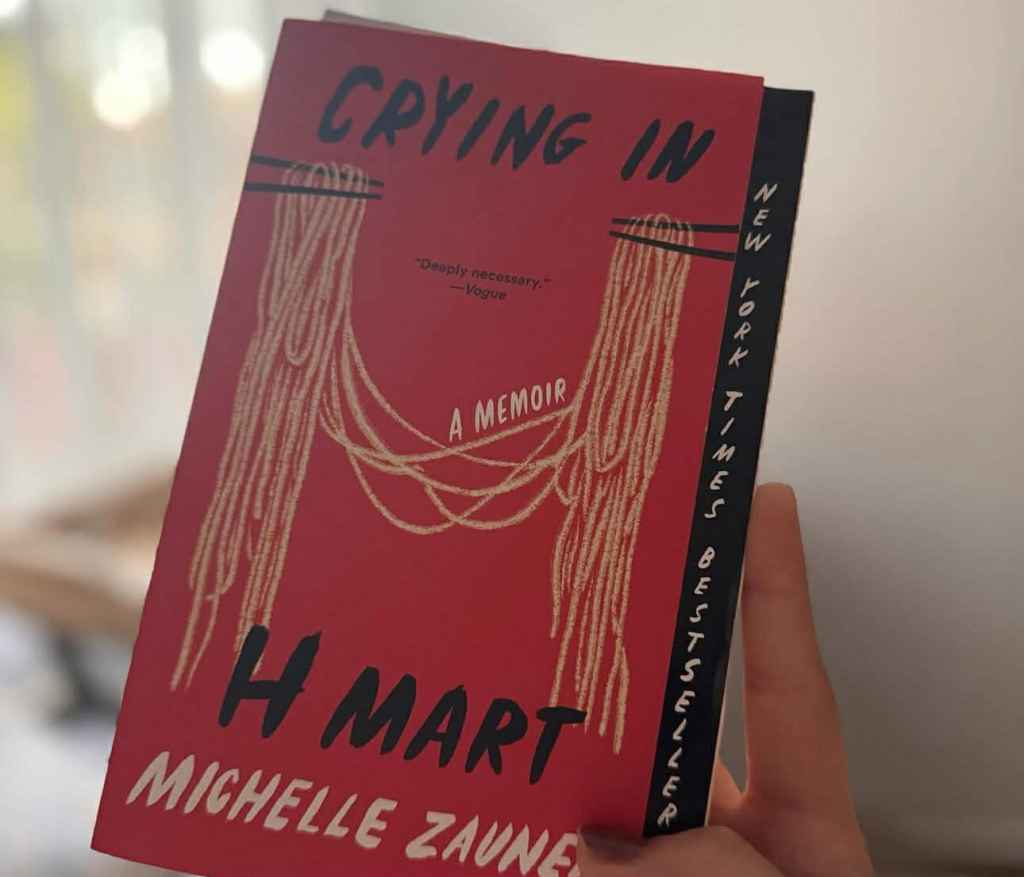
“Stop crying! Save your tears for when your mother dies.” Chongmi
Michelle Zauner creatively writes a memoir of her mother through stories of how Chongmi showed her Asian kind of love — food and tiger-style parenting
I read this while I was going through a difficult phase in my life: my father is terminally ill. But even on top of that emotional rollercoaster I am going through with my personal life, I can definitely say that this book hit whatever it is in my tear ducts; I can’t help but explode with tears.
It is a lovely tribute.
It’s like a love letter of a daughter unveiling her undying love and the memories with her mom.
It is an homage to a lingering feeling of gratitude and grief.
It is a piece of reflection of how painful it is to lose a loved one.
Chongmi is unique in her own beautiful way. There are habits, principles, and beliefs that only Asian moms like Chongmi could instill to their children. And I completely relate to that with Michelle’s storytelling.
What made me believe that Michelle is a genius storyteller is that I can’t help but cry and feel the emotions through her words. This book is simply too good; one can finish this in one go. I just really had to pause several times because I can relate so much to her struggles with my dad suffering illness at the time when I was reading it. He passed away 3 months after. When I was reading the book, I couldn’t image the pain of losing a parent. And now that my dad is gone, that piece of feeling keeps on lingering within me. The longing for someone you know would never come back.
We all have that unique connections with our loved ones. And when life suddenly whispers, “your time is up,” we can’t help but long for more—more time to say goodbye, more time to express our gratitude, more time to honor their place in our lives. Sometimes, we wish we wouldn’t even have to say goodbye.
How to bid goodbye to a parent? I can only pray not to know.
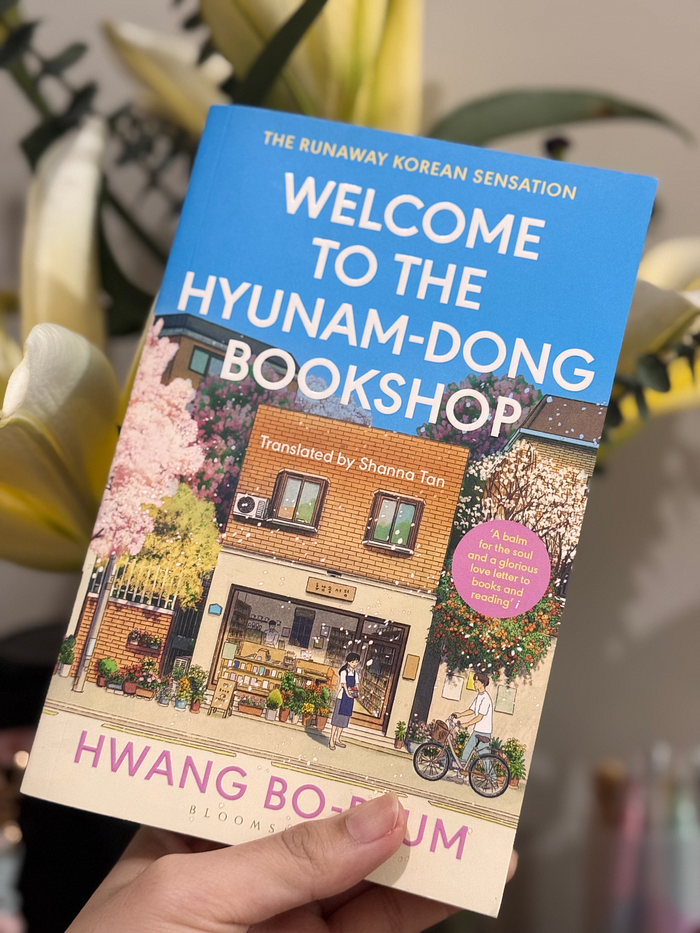
“The yardstick to one’s life lies within oneself. And that’s good enough.” — Hwang Bo-reum, 2022
They say books help you reimagine a different life outside of yours. That is why I like reading books. It helps me get distracted in the current chaos of the world. I have been trying to go back to reading recently as I lost the habit due to busy schedules. I promised to go back to reading and this book is a good start. When I started reading Welcome to the Hyunam-dong Bookshop, I struggled to like it. But a few more chapters later, I began to appreciate its beauty. It was just the best pick for me at this time.
The book is a slice-of-life type of reading. It attempted to discuss debatable topics such as employment, finding meaning in life, and pursuing happiness. It bravely touched on some aspects of divorce, too.
More than the plot, I liked how the author created colorful characters in the story which made it more human and relatable. I’ve lived in Korea and I can say that most of the stories of the people who joined Yeongju in the bookshop somehow reflected real-life stories of people you meet in South Korea. This reflects the author’s deep grounding in social dilemmas that many members of the working class face in real life. Perhaps that is the reason why the book was a hit locally. It almost felt like I was watching a Korean neighborhood drama with its dynamic conversations in between storytelling. Each character brings with them their take on life and represents our unending pursuit of life’s meaning.
These are purely my interpretation of the book and I welcome your thoughts about it, too.
Things I’ve enjoyed (spoiler alert)
Courage to take full control of your life
The bravery that Yeongju took in changing the course of her life and opening a bookshop. Although her back story came later in the book, I was surprised how a woman like her would brave the path of ending her long-built career and living a life completely different from what she had started. Let’s be honest — in this world where one is judged for what he or she has accomplished through work, it is a brave act to leave everything you have built to pursue a childhood dream like the one Yeongju has — opening a bookshop.
“Running an independent bookshop was like roaming a stretch of land without roads. There was no tried-and-tested business model.”
I was also amazed at how she bravely faced the danger of being ridiculed for her one-sided decision on her relationships. Whether it was her partner or her mother, she took full responsibility for her life despite the uncertainties of her unconventional life decisions.
Redefining success and oneself
Minjun was one of the characters I truly admire. I like his very human reflections on one’s struggle to fit in the mold. He worked super hard to reach what was defined by society as a path to success — study hard and land a job. After struggling to find a job after all his hard work, he decided to no longer conform and pursue life how he wanted it.
“How much of our time is truly our own if we devote ourselves to work and the company we work for?”
I was struck by it and made me reflect on who truly owned my life all this time. I guess, I liked how Seungwoo said that it’s okay to pursue a work that you like but it doesn’t stop you from doing things that you love.
I also liked how Heejoo tried redefining herself once she took over one of the book clubs. If you are a Korean, you would know how big of a deal it is on how people call you. Most of the time, if you are a woman, your personality evolves as you take on new roles in life. Once you are a mother, you have become someone’s mom. People in your neighborhood would start calling you “[your son or daughter’s name] Mom” and no longer by your first name. The scene where she introduced herself as Heejoo was an act of taking herself back which I think was a brave act for women, especially in a setting like South Korea where females are expected to take roles like being a mom or housewife above their individual identities.
Lastly, what I truly liked about this book is how it pays homage to the beauty of books.
It gave us a glimpse of how books can be a piece of solace amidst the chaos in life. It showcased the connection that books can create to their readers and how powerful they are to move communities and minds. I like how it was said in the book:
“Reading makes you deviate further from the textbook definition of success because books don’t make us go ahead of or above anyone else; they guide us to stand alongside others.”
I liked it overall. I hope you liked the book, too.
I guess I am slowly turning another chapter again in my life as I write this entry. It has been rough the past few months but I am slowly getting the beat again.
I realized we needed some painful setbacks for us to recalibrate our visions, our goals, and ultimately, our perspectives in life. There was this one moment when all the things that I hoped for crashed and all the trust and wishes for a smooth sailing life eventually turned into ashes.
It made me cry. I felt restless for weeks. It made me think of the many things that most of my age encounter these days — sadness–an overwhelming kind of sadness.
There were moments when I just wanted to quit, stay on the side and just do whatever I needed to do to survive a day.
I am barely living the life I wanted.
I was so tired of thinking where to go next, what to do, and live the life I am supposed to live.
But there came a day when I found hope on all that is happening. There must be something out there or someone out there watching me and directing me take a closer look on what I have right now and where I want to be.
With those few but big bumps, I am slowly appreciating the rough edges. Maybe, those were necessary to motivate me and transform me into a better person. Maybe, each problem, each day lived in desperation, each person who made me feel something — they were all necessary.
It brought me to the idea of checkpoints. Maybe I was in another checkpoint during those times. Maybe I am being led to another path or being led to another level.
Whatever it is — I came to realize that it’s normal. It is necessary and so I must move forward. There will be several checkpoints ahead of me and I must not lose hope.
KonMari has been so popular these days that so many people are starting to rethink their lifestyle and how they put their “shit” together. Thanks to Netflix, for mass introducing the Japanese minimalist way of life.
If you’re wondering what KonMari actually means, it is safe to introduce you to the infamous Japanese decluttering expert — Marie Kondo.
Thanks to this charming Japanese lady, all of us now are striving to keep this planet a better place ONLY for the things that elicit happiness in us. Her new show is a cultural phenomenon.
Cos why not? KonMari is such sa beautiful thing. The thinking inspires people to let go of the the things that do not spark joy and to generally keep things tidy. The method looks easy but it is not. Keep only the things that “spark joy” in you and everything else, you should let go. As in trash them. That Zara blouse you bought for $80? Let that go.
I think this is somewhat fantastic not just in tidying up our home, workplace, or any other space. It could be useful in rethinking our life ahead. If people and habits, spark joy in you, then keep them. Otherwise, let them go.
Even before the KonMari phenomenon in Netflix, I have been a fan of the Japanese minimalist lifestyle. As a Christian, I have subscribed to the idea of keeping things that you need and detaching one’s self to the material things in life. And for that, I think Marie Kondo is heaven sent to humanity. Letting go of the materials things and focusing on what it can bring out from us — I think it’s hilarious!
No, I am not yet Kathleen when Martial Law was declared. But I studied and I have opened my eyes to various literature that reminded me of the crimes committed during Martial Law and I refuse to close my eyes and shut my mouth just because I am not yet Kathleen that time.
I was born in 1993. Too far from the glorious days of the Marcoses. But why am I too passionate about it? It’s because it’s part of our history that should never be forgetten. And sadly, up to this day, there are lots of false narratives and myths about it.
Let’s stick to the facts.
I am fortunate to have a Professor in DevCom who witnessed first hand the atrocities during Martial Law. She was a journalism student in UP Diliman when then President Ferdinand Marcos declared Martial Law throughout the country. For our DevCom 80 class, we had to recall many events in the past that shaped our society in relation to the field of communication. And of course, Martial Law is a very significant period. Many of the known journalists today witnessed and have been part of the struggle to fight for the freedom of the press during that dark period in our history.
Problem is that: many parents/adults living today continue to narrate stories about the “good things” they experienced during Martial Law. I am glad my parents are not among those. But I know so many people who refuse to believe in the narratives written and published by credible sources and literature. Their narratives usually start with “tahimik nga non at maganda ang buhay”. “Maraming takot sa gobyerno noon.” “Walang gulo, lahat naniniwala sa gobyerno.” “May mga ration ng pagkain.” “Maunlad. Nagkaron ng mga kalsada, ospital.”
Two words: peaceful and prosperous. I don’t blame them for believing that the Philippines experienced its golden years during Marcos time. In communication, there is always a reason for why people believed in that messaging.
That was the plan of the Marcoses. To make it look like it’s “peaceful” and “prosperous”. People can’t see news reports about the actual situation of the Philippines because TV and radio were controlled by the government. Publications were closed. People opposing and exposing government anomalies were killed or were sent to jail (just like what happened to Ninoy and many more). You can’t see news stories of people being murdered, tortured or being raped because it is not allowed. If there were reported cases, only few will know. Mostly, those near the capital. Mostly, those who were part of underground movements and student-led organizations. These people struggled to get the message across because, as said, the Marcoses owned the masses. The masses were blind. They didn’t know what’s happening.
It is just sad that until today, the struggle continues. Many people refuse to acknowledge facts presented to us by history. Many people refuse to understand why people continue to fight the return of BBM and all other evil Marcoses. Many people refuse to acknowledge the lessons given by our past.
Being a communication student and now a professional, I accept the challenge to continue to educate people and send the message across. I will not stop. I will continue to narrate the facts. Facts don’t lie. I will #NeverForget.
===
Was it really a Golden Age for the Philippines? Different people may tell different stories, but the data reveal only one thing.
Most of the time you will see stories of champions, leaders and the like but you rarely see stories of those who put these champions into the spotlight, those who worked their asses off to let someone shine.
Maybe, this post is something for those people — those people who are happy in the background, almost always forgotten, almost always the regular team member.
I am not here to convince you to pity those who chose to keep it low key. That’s how I view them – low key people.
I don’t want you to feel sorry for them because I am here to put some of my boxed feelings into words, into a beautiful narrative of how I appreciate those people in the background who actually make things happen.
This topic is no stranger to me. I, myself, is part of this pack that I would like to call as the “unseen” pack.
I remember one time when my professors decided to give out some recognition to all the hardworking tutors and team leaders for the Winter English Camp when I was in South Korea for an exchange program.
They called everyone except me. They forgot my name! 🤷 The thing is — I was part of the team who actually bagged the title during that camp. Haha! It was funny because it was not the first time that people actually forgot my name! As a shy girl, I told them that it is actually okay. Okay lang talaga, lol. No hard feelings.
As early as that, I know I am not “remarkable”.
College groupings.
Successful org events.
Team accomplishments.
A boss congratulated the team but forgot that I was part of it.
Things like that.
It happens all the time.
Sometimes, it is frustrating. As part of the generation where validation plays an important factor on how I view myself, this little thing makes me feel less at times. Maybe, you’re also feeling the same.
And true enough, I heard a lot of same stories of the best people I know who actually felt the same way. Most of the time, their efforts weren’t recognized. Sometimes, I feel bad. But most of the time, I have just accepted that it is part of the game.
There are people who shines with their brightest lights and there are people who have to dim theirs for others to shine. But dimming your light doesn’t mean you’re not good and not enough. Sometimes it means you don’t need to measure the light that you have. Instead, you try to see how you have made use of that light.
It is all about how you view things.
And to put things into perspective, imagine how many people helped our heroes to achieve freedom? But these people are often not recognized.
Imagine how many other people worked hard to make the first landing in the moon and yet, only Neil Armstrong has the greatest spotlight. Most of the time, only one shines over the countless of people. But those countless people are as important as Neil Armstrong.
So to you, who can relate to this, don’t be sad! They wouldn’t make it without you. After all, success does not lie in the recognition; it is in the relationships you have built and the lessons you have learned. ✨
And that’s how you shine not for yourself but for other people who appreciate your hard work. ✨
Cheers for all the people who made things happen and cheers to you, the silent and low key achievers of the world. 🍻
When I was in college, one thing I was too excited about was to be part of an organization that I like. Not like the usual academic clubs and organizations in high school where we were forced to be part of, in UP, we have the liberty to choose our organizations.
I have many options. I can choose an academic organization that can help me get through my studies; a varsitarian organization that can help me link with people who have the same interests or roots; a debate organization that can give me trainings –there is just too many to choose from.
But I chose to be part of UP SIBOL, a socio-civic organization that helps the marginalized sector through outreach and development-oriented programs.
Helping the marginalized? It seems ambitious. As an ideal college sophomore, I had that level of ambition to contribute to something bigger than myself. Something that I think I can achieve through UP SIBOL.
And yes, it helped me. A lot.
When I got in through a process that felt like hell, prime motivation was still aligned with SIBOL’s mission of uplifting the lives of many communities through little ways of a student-led organization. We have several outreach programs that cater to the kids, indigenous peoples, mothers, and many more sectors that needed attention.
It gave me something to look forward to. It provided an avenue for my passion to serve the community.
Joining means you care
I am no rich kid. I came from a middle-class family that happens to encounter financial struggles every now and then. But I grew in a family of givers — no matter how small, we should always share. That’s what my mom taught us when I was a kid and she continues to influence us ’til this day.
When I joined UP SIBOL, it felt like I am finally leading a life with purpose.
I remember so vividly my first activity as a newbie in my organization. We had our annual Street Kids initiative where we held a Christmas outreach program with the abandoned kids of Laguna.
It was a fulfilling first of many.
I can still remember the night before our outreach, we were too busy preparing food items and collecting Christmas gifts for the kids. With no decent sleep the next day, my heart gained tons of happy cells and energy when I saw smiles from the kids when they received their Christmas gifts.
We had so much fun. I had so much fun and it felt really good.
And that was the beginning of my journey of sharing a part of my self to the people I think we have to give our attention to — the poor and the marginalized.
Deeper, meaningful programs
Our programs expanded from catering to the street and abandoned kids, to providing opportunities for mothers to receive alternative learning.
It was one of the things I really liked about SIBOL — arms wide-open — we are ready to extend assistance in any possible way that we can as a student organization.
And when I got back from my study program in South Korea, I was too happy to know that we are finally touching more lives of not just kids but IP kids.
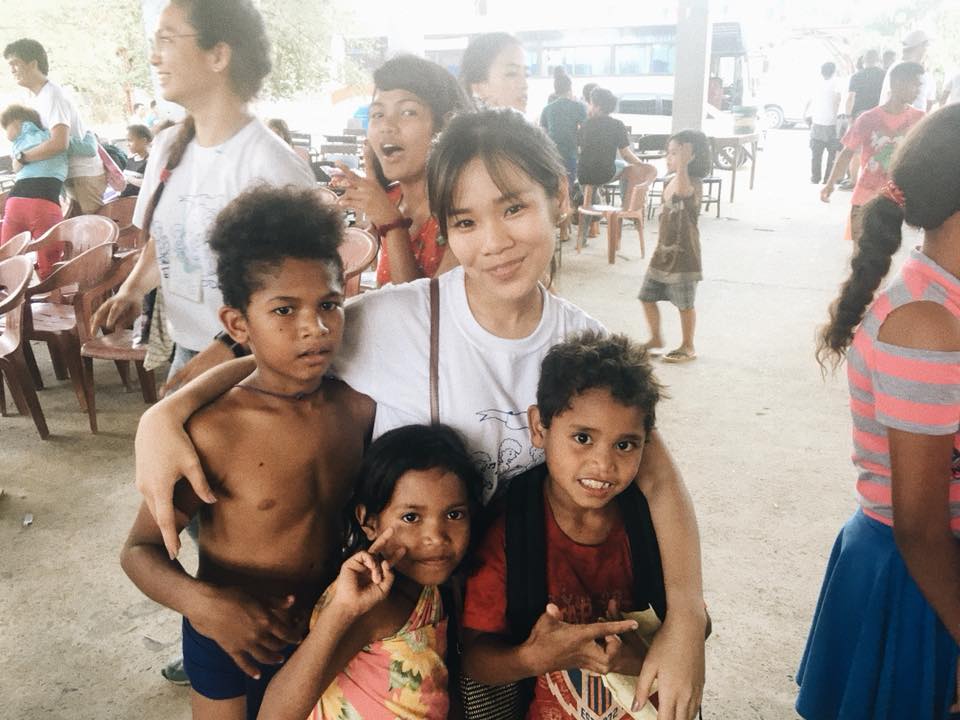
The Aetas of Zambales gave us another opportunity to extend our hands and hearts to the community.
AETAguyod is a brainchild by one of my seniors (also one of my early mentors in the organization), Sonny.
When Sonny was elected President of the organization, he had a chance to pitch the program to the members and alumni of UP SIBOL.
Sonny envisioned it holistically address the immediate needs of the indigenous kids in a school run by Franciscan nuns in Zambales. This school provides IP kids an opportunity to receive primary education for free including daily meals and lodging. However, like any other social institution, the school lacks sustainable funding and has difficulties in many aspects.
Sharing a piece of ourselves
More than helping them receive donations and immediate supplies, we wanted to empowerthem. That is for sure. We believe that it is always more than the material things.
As most of the resident members are development communication students, we did series of community analyses on how we can help. We have personally learned from them their views and perspectives about our society as a whole.
It dawned upon us that more than the material things that we think they are lacking or haven’t had the privilege to enjoy, I personally felt that, what they lack is the confidence to face the world with their roots and culture. They are not proud of who they are.
They never felt that they were normal people experiencing discrimination on a regular basis. This made them feel like they are inferior individuals and that being an Aeta is something to be ashamed of.
Hence, most of them stopped believing in the future, they stopped dreaming.
And that’s quite sad, right?
Imagine children without dreams? Children without faith in themselves
and what the holds for them?
For our our first attempt to help them realize that they are important part of our society and that there are people who believe in them, we worked harder to let them join us in UP Los Banos.
We raised funds from our own little ways to fund their trip and did a benefit concert* where they shared their excellent talents with the UPLB community.
*All proceeds went to fund their immediate needs including supply of food.
Students of St. Francis Learning Center performed to the UPLB Community during the AETAguyod Benefit Concert organized by UP SIBOL.
They had fun and the people enjoyed every performance.
They were applauded and supported by the community.
We were touched by the fact that there are so many students who are willing to share a part of themselves in making the Aeta kids feel loved and valued.
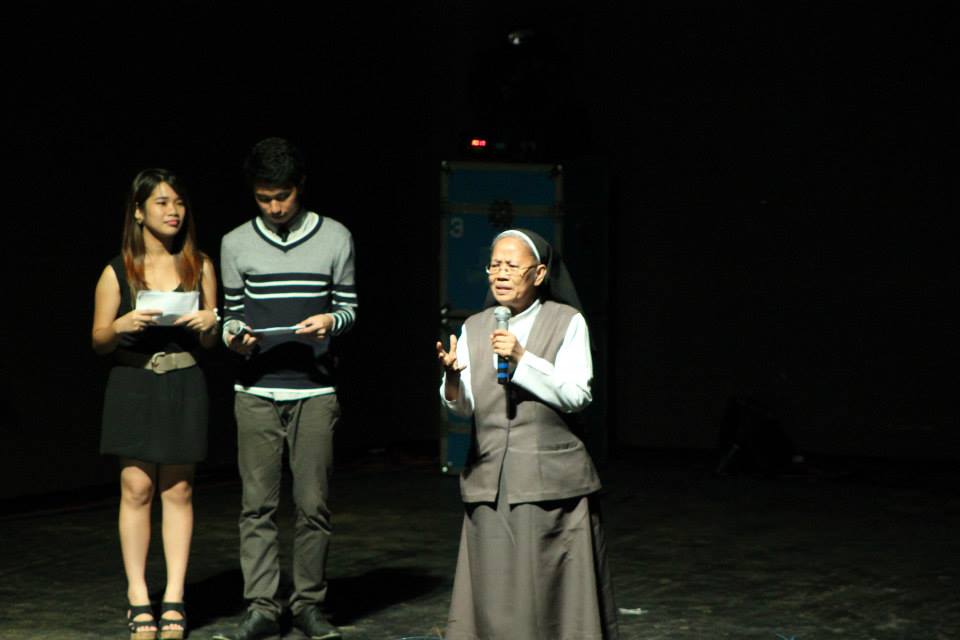
On my own little contribution, when Sonny asked me to host the program with Bryan, I immediately said yes. It was surreal.
Bryan and I served as the hosts for the benefit concert held in 2013 for the Aetas of St. Francis Learning Center.
They thanked us, numerous times. But in reality, it wasn’t us who helped them. It was them who helped us realize so many things in life.
They weren’t just the ones with new dreams — we learned to dream bigger as well, not just for ourselves, but for them. I think that’s the best thing I learned to treasure in my heart over the years. I won’t stop dreaming for others.
Caring continues
The concert was just the beginning of our journey with the AETA kids. We had several outreaches in the community. Conduct of learning experiences about proper nutrition, culture appreciation, livelihood making, and a lot more! We did our best to transfer knowledge that we have to their community that we think will be useful for them someday, or somehow.
UP SIBOL have been instrumental for me to realize that opportunities are limitless when it comes to giving and caring.I can always be an instrument in making someone’s life a little easier and lighter. I can’t sponsor a child (yet) but I know I can always try to be an inspiration to them to dream big and conquer their struggles.
Preparing the kids’ breakfast during our visit last March 2018.
There is a Chinese proverb that goes: “If you want happiness for an hour, take a nap. If you want happiness for a day, go fishing. If you want happiness for a year, inherit a fortune. If you want happiness for a lifetime, help somebody.”
True enough, many people have claimed that the road to happiness is actually the road traveled by givers and carers. Happiness is found in caring for others.
I guess what I’m saying is this: I know for a fact that these things are so little compared to all the big battles we are all facing — poverty.But I know for sure that if caring continues for these people, slowly, we are letting them know that they are not fighting the battle alone.
❤️
To know how you can help, send @UP SIBOL a private message on Facebook or talk to me (we have something exciting in the pipeline). 🙂
Why do you like it? What makes you believe that it is a good purchase?
I was recently tasked to do a research and certain write ups on how good packaging further enables a brand in penetrating the local and international markets. As part of the Trade and Investments Promotion Group, our task is to help Philippine businesses in accessing not just the local Philippine market but more importantly, in accessing top export markets abroad. That’s a huge task, yes. But of course, as part of the government, we are always up for the challenge.
Through and through, our task is to hunt for the best brands that are proudly Philippine made. Through the conduct of international and domestic trade fairs, we are almost always in discussion with top-notch and world-class Philippine enterprises. Some are big but most are small enterprises.
On a personal note, whenever I watch an influencer I deeply admire, I always wait for the ‘unboxing’ time. I think it’s part of experiencing the brand. Some of the best products that I follow have really good packaging and for me, that is really important in catching your consumer’s attention. From their boxes/containers to their designs, it tells how the brand value you as a consumer.
For most, packaging catches the attention of the buyer. As humans, we are very visual and we rely most of the time in our sense of sight.
According to Canva, “packaging, when done correctly and creatively, is ultimately what sells your product.”
True enough, packaging is the top mean to market your products. It tells the story behind your brand. Look at the most successful brands in the country and even abroad, all of them exhibit good packaging.
Below are some of my favorite homegrown brands with really good packaging. Of course, more than the packaging, these brands are also top-notch.
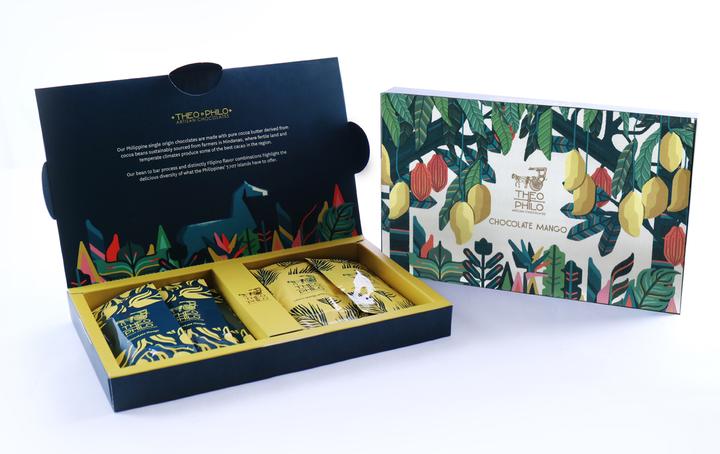
1. THEO AND PHILO
Theo and Philo — Philippine chocolate. (from the website)
2. SUNNIES FACE
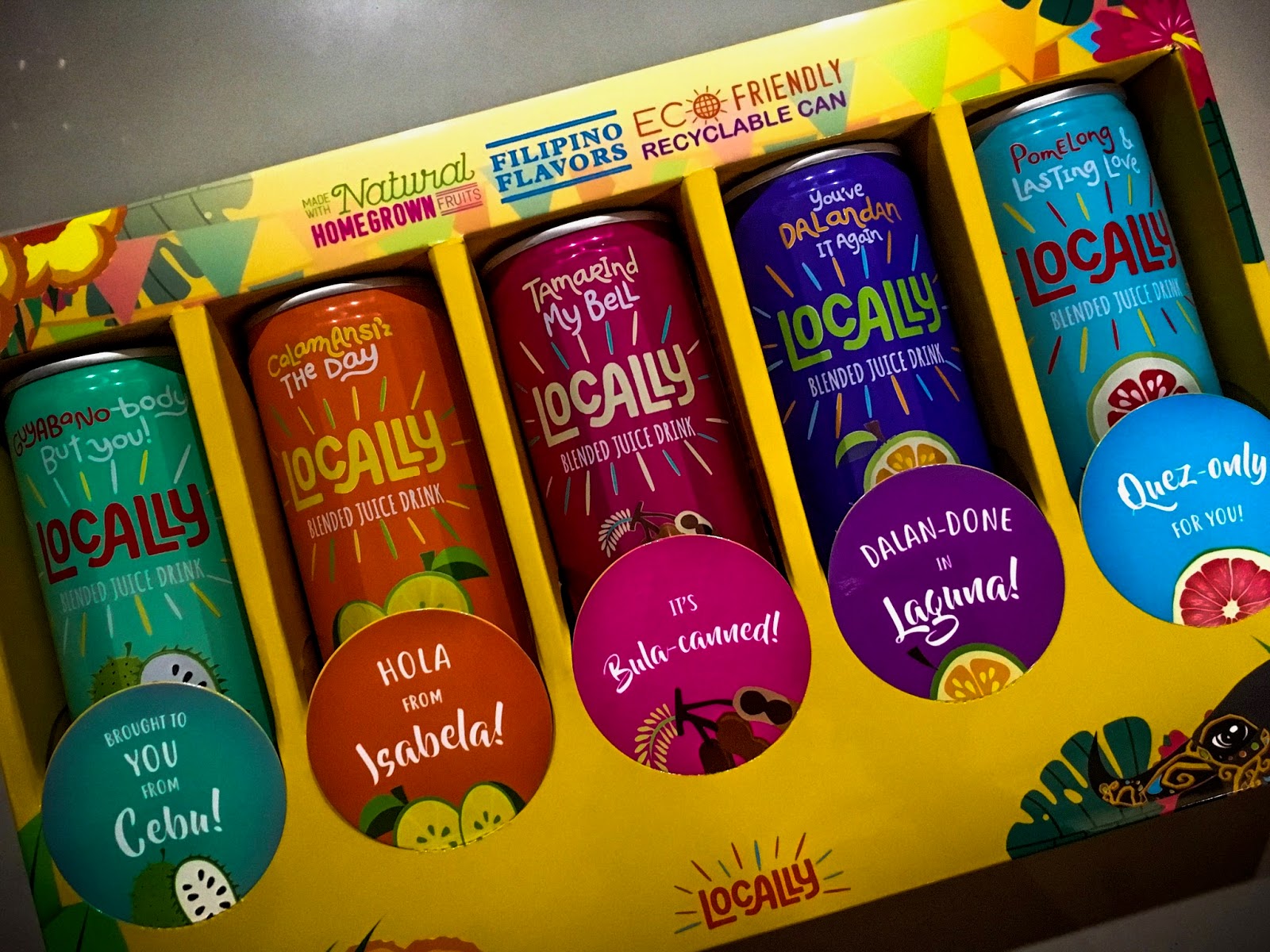
3.LOCALLY JUICE DRINK
4. Manille Liqueur de Calamansi
5. Happy Skin PH
As part of the initiatives of the Department of Trade and Industry of capacitating more local businesses in terms of marketing and product development, the DTI recently led the conduct of the 1st Packaging Summit in the country. The summit primarily aims to inspire local businesses in upgrading their packaging and helping them acquire the latest trends in packaging. Through this, the government expects to boost the number of Philippine brands entering the mainstream market, competing with other world-class brands.
Filipino products are really good. Our dried mangoes, our banana chips, our chocolates. Our goods are really among the best. I have encountered a lot of delicious food products from the Philippines that are incomparable. But then, we lack brands that are champions in terms of packaging. They fail most of time in terms of catching the consumers’ attention and that oftentimes, limit its capacity to scale. With the available of technology and the rise of social media, now is the best time to make Philippine products “instagram-worthy.”
Start today, share your most loved local brands with their best packaging! 😉
..”can you please briefly describe yourself?”
Forced to be part of the editorial team during her schooldays, Kate developed a love-hate relationship with writing throughout her school life. She majored in community broadcasting because she loves creating content for the eyes and ears! She immediately started working for the government when she graduated in 2015 for her hope to contribute in advancing government relations to its people. As a wide-reader of current events and a non-fiction book fan, she describes her self as a bookworm and a movie buff. She sips coffee most of the time and she really can’t deny that Obama is her modern day hero.
A little overview of some of my work.
This was delivered by my boss in a forum in Germany last March 2017.
Let me know your thoughts about it! Happy reading! 🙂
Like in other countries, the business landscapes have changed in the Philippines with the advent of advanced technologies and various disruptive business models. We are now facing the rise of a new economy – the digital economy. Countries around the world are now shifting from traditional to digital.
Today, my task is to share with you what the Philippines is doing to promote women entrepreneurship and startups.
As the Philippines’ embraces the rise of a digital economy, the government has been fast tracking policies and interventions that would uplift the innovative spirit of Filipino entrepreneurs and would enable an environment for new breed of businesses to thrive.
In the past, we have been implementing various interventions that would help women improve their entrepreneurial skills, capacitate their businesses, and access new markets. But among these initiatives, on top of my list and probably my favorite, are the interventions that we do that focus on Women in Technology.
CHANGE OF MINDSET: AN ESSENTIAL FIRST
Technology and social media have afforded us access to wide range of information. There are many stories out there that are based on facts and evidences which are powerful enough to build confidence of the women in technology. For example, contrary to the belief that technology is historically a male-dominated field, there was Elsie Shutt, a woman, who founded the first software business in the US. Shutt formed her business when the time Bill Gates and Steve Jobs were both only three years old.
Another example is from the World Economic Forum report saying that many of the pioneers of computer programming were women. In fact, a group of women who fought secretly during World War II, while men went off to fight in various battlefields, were women calculating trajectories and ballistic tables for soldiers and bombardiers in the air. These women were mathematicians or “computers” as they were secretly called. A documentary was created featuring this amazing story.
Even after the war, programming was still an industry dominated by women. When Elsie Shutt founded Computations Inc. or CompInc in 1958, all of her company’s programmers were women. It was only in the 1980s when the once female-dominated field became a field for men due to advertisements highlighting computers as toys for boys.
When Elsie Shutt was asked why she thought so few women were programmers, Shutt explained: “I think if there have been fewer women than men in computing, it’s because they’ve been discouraged back at the education level from majoring in math, or engineering, or computer science.
Mindset plays a very important part in building confidence in a woman that she can be as good as men in the area of technology. S.T.E.A.M. AS A WAY TO GO
Our call is to revive these times – attracting women in the fields of science, technology, engineering, arts, and mathematics (S.T.E.A.M) as according to a study conducted in the United States, women with STEM jobs earned 33 percent more than comparable women in non-STEM jobs. As a result, the gender wage gap is smaller in STEM jobs than in non-STEM jobs.
We, in the Philippines, include the Arts with Science, Technology, Engineering and Math – the STEM subjects in the educational system in our country. It is an added dimension that makes STEM fun to study.
As we realize the evolution of businesses, the competitive market, and the dynamic behavior of consumers around the world, we see that innovation is the way to go. But what drives innovation? It is creativity – the ability to play with ideas, concepts, and models – an essential in birthing new products and services. It is imperative for entrepreneurs to understand these to put something new to offer and to continuously improve services and product offerings that would pave way to new businesses and industries.
Thus, we see arts as an essential component in building the innovative capacity of economies. Arts induces and sharpens creativity which when combined with logical thinking, can further enhance the entrepreneurial abilities of women and men alike.
According to the same study conducted about STEM, there could be many possible factors contributing to the discrepancy of women and men in STEM jobs. These include: lack of female role models, gender stereotyping, and less family-friendly flexibility in the STEM fields.
These causes are not far from the results of the study conducted by the United Nations (UN) that identifies four overarching factors that impede gender equality in all forms of work and at all levels of development: adverse social norms, discriminatory laws and insufficient legal protections, gender gaps in unpaid household and care work, and unequal access to digital, financial and property assets.
Regardless of the reasons, the findings of these studies emphasize the need for societies to encourage and support women in the said fields.
Hence, the Department of Trade and Industry (DTI) together with ASEAN Women Entrepreneurs’ Network (AWEN) greatly support events and initiatives that would further our efforts in encouraging women to step up and disrupt the stigma that women are not as equal as men in terms of skills and knowledge in STEM fields. CHAMPIONING WOMEN IN ASEAN
In the Philippines, it is with pride that I share with you that we are doing better for our women agenda. In fact, in the recent report of the World Economic Forum in terms of Global Gender Gap, we ranked 7th among the 144 countries that were surveyed. This is a good indication that the Philippines’ efforts to improve policies and landscapes for women are being recognized and lauded by economic organizations around the world.
The Philippines is by far the best-performing of the 10 ASEAN members with 79% of gender gap closure. It is also regarded as the only country in the region to make the top 10 globally with its progress on increasing women’s participation in economic and political spheres with a fully closed gender gap on health aspect (WEF, 2015).
These findings motivate us not to stop with our battle to champion women with no reservations.
In the Department of Trade and Industry – Philippines, we have various support services particularly for technology-driven businesses that also allow women to participate in propelling the economy.
We have Slingshot Philippines or Slingshot PH, a government-initiated platform that supports public dialogue and partnership, and helps in building and nurturing an enabling environment with policies and programs for technology and innovation entrepreneurs. With SlingShot Philippines, the government realizes the importance of nurturing an ecosystem and supporting the community by allowing them to convene, discuss, and move mountains through networking and linkages. These will further enable our women. As small businesses integrate and adapt with available technology, they make it work for them by creating virtual spaces – spaces that we believed are more flexible and practical for women. It allows women to provide the necessary work that a company requires without them leaving their homes and duties as a parent.
We also highly encourage women entrepreneurs to seek services available in Negosyo Centers or one-stop shops which cater to the needs of established and potential entrepreneurs.
As the Philippines host the Association of South East Asian Nations (ASEAN) Summit this year, the Philippine government works closely and in collaboration with ASEAN Committee on Women (ACW), ASEAN Women Entrepreneurs’ Network (AWEN), and various women organizations, in elevating discussions, building commitments, and establishing a common understanding on various gender issues in the region.
I hope the message here is clear: women are partners for growth and are equally important as men in terms of advancing our economies. It is with technology that our women are more enabled and more empowered in unleashing their potentials and ideas in creating disruptive businesses to the world. As technology further allows women to work while they remain to be the light of their homes for their families, the more that we need to urge young girls of today to seek the fields of science, technology, engineering, arts, and mathematics.













 under the sun